
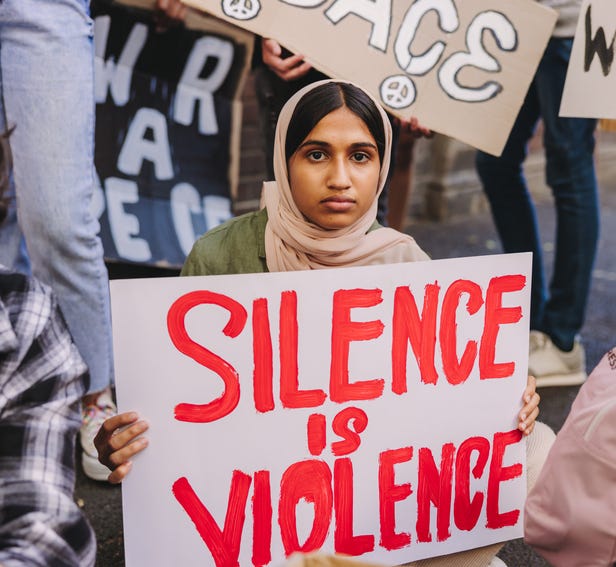
There is very little conversation about some areas of conflict outside of Ukraine, Iran, and Gaza. Conflicts in Sudan and the Democratic Republic of Congo, for example, get little attention. And even when conflicts are mentioned, women and girls are rarely a focus of enough discussion. Women and girls are perishing and suffering trauma that will last them for the rest of their lives. Whether under siege or even blockade, women and girls suffer the most when security and peace are lost.
Women hold our societies together. Women provide for their families and communities. When conflict erupts, women and girls seek water, food, and shelter for themselves and others in their care. By harming them, aggressors take away a community’s chance to thrive and survive. These women and girls suffer immense trauma with no way to escape or with few who can help them.
In the end, this neglect is a self-inflicted wound because wars and aggression not only destroy the lives of women and girls, but conflict saps the global community of what each country and destroyed lives could be adding to their capacities and contributions to all of society. Instead, we are watching the loss of the backbone of societies around the world. From Gaza to Sudan to Cuba to Iran and other locations, women are suffering from ongoing aggressive actions. They have no peace and are losing what they’ve become accustomed to doing in their daily lives.
Sudan continues to be the locus of extreme suffering for women due to the ongoing civil war. Currently, 4.3 million women are displaced. That number could be higher because it is difficult to obtain an accurate count during an active conflict. According to the World Health Organization (WHO), 7.1 million women need immediate food and medical assistance. The healthcare system has crumbled. With the increase in war, sexual violence has also increased. Women and girls are being targeted.
In Gaza, there have been well over 100 evacuations and orders from the Israeli Defense Forces for Palestinians to leave their homes. Women have been homeless many times over, many of whom are also the sole providers for their families. Over one million women and their children are currently experiencing this ongoing displacement. Each instance of displacement strips these women of any meager comfort they’d found in access to water, food, and medical attention. Many medical facilities that could assist these women are being destroyed. The UN has confirmed that there have been at least 927 attacks on health care facilities and ambulances. Medical workers have been targeted and killed. Some women are pregnant; some have disabilities. Hospitals that house pregnant women have been destroyed, as have fertility clinics. Food is scarce, and access to clean water is limited. According to UN Women, over 38,000 Palestinian women and girls (including more than 22,000 adult women and 16,000 girls) were killed in Gaza between October 2023 and December 2025. An additional 246 Palestinian women and girls were killed between the October 2025 ceasefire and late July 2026.
The UN reports that rape is being used as a weapon of war amid the ongoing conflict in the eastern Democratic Republic of the Congo. Women and girls also face displacement and targeted abuse. Human Rights Watch reports that cuts to foreign aid and the cancellation of critical supply shipments—including USAID-backed post-rape emergency kits—have left local clinics and organizations without essential treatments for survivors.
In Cuba, although there is no ongoing war, hostile actions by the U.S. are leading to suffering. The United States has intensified a “maximum pressure” blockade campaign against Cuba to force political and governmental change. While it is questionable whether the blockade is achieving political change, people are suffering, and without supplies, so are women trying to care for their families and communities. “There are families that have men that don’t have jobs,” says one Cuban woman to the BBC. “But the women are the ones that have to think about what they are going to make their kids eat that day. They have to prepare their snacks, worry about school, take care of the house and everything that comes with it.” There are reports of children who are out of oxygen and medicine to fight their cancer. People have witnessed women give birth in the dark because there were no lights on in the hospital. The country’s pervasive blackouts put babies who depend on incubators in a precarious, life-threatening situation. Doctors cannot perform surgery on sick patients. Reports also indicate a lack of fuel to send ambulances where needed.
This brings us to Iran. We know of the bomb that killed at least 150 people at the Minab school; the majority of those victims are girls. There was also a bomb that hit a sporting facility where women were playing volleyball on the same day. A U.S. strike also hit a wedding gathering in Sirik earlier this month. The precise toll and circumstances of civilian deaths in Iran have not been established, but as the war continues, we know that women and children will continue to suffer.
The UN Secretary-General has highlighted that a staggering 676 million women live in areas affected by conflict around the world. More women and children are dying each year than the previous year. The stories are horrific, but the international community still fails to address these problems. Ignoring what is happening is its own form of cruelty, and allowing these situations to continue is worse. Women and girls play so many important roles in our society. Wars, conflict, and aggression destroy their lives but also cut off and set back what societies can achieve.
Bonnie D Jenkins is the Shapiro Visiting Professor at the Elliott School of International Affairs, George Washington University. She is also a Practitioner Senior Fellow at the Miller Center at the University of Virginia. She served as Under Secretary of State from 2021 - 2024. She is also the Executive Director of Women of Color Advancing Peace and Security (WCAPS), an organization she founded in 2017. From 2009 – 2017, Jenkins served as Special Envoy and Coordinator for Threat Reduction with the rank of Ambassador. She is a retired Naval Reserve Officer and served as Counsel on the 9/11 Commission. She is a member of the New York State Bar and an Honorary Member of Delta Sigma Theta, Inc.