
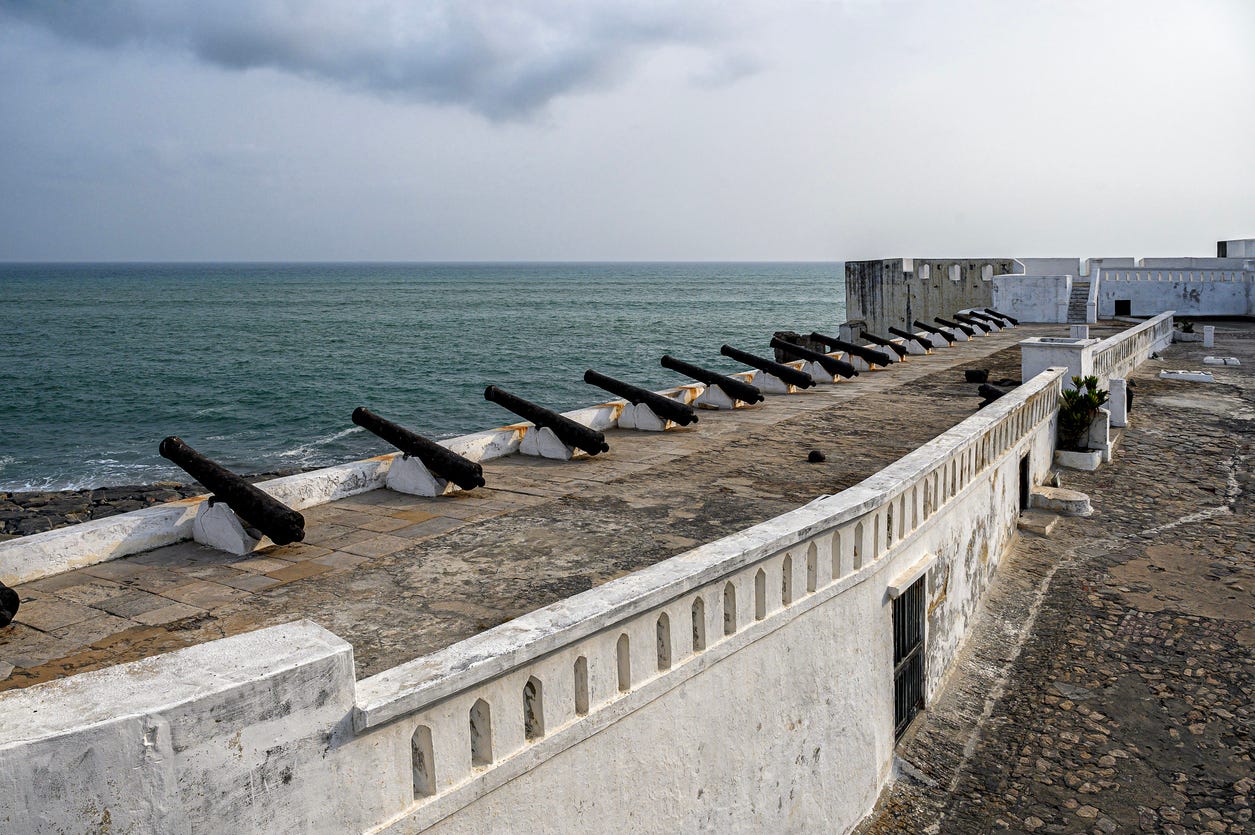
The United Nations General Assembly recently passed a resolution on March 25th that rightfully deemed the transatlantic slave trade the most heinous crime against humanity. Remarkably, this happened to fall on this year’s International Day of Remembrance of Slavery Victims. When ranking injustice on a historical scale, the effects of slavery on Africans and their descendants were recognized to be inconceivable. Ghana led and introduced the resolution that was sponsored by 123 countries.
Slavery was labeled an atrocity, and countries were asked to discuss how to engage in a process of reparative justice. UN member states were encouraged to begin talks to provide a full and formal apology and to consider reparations as a tangible action to correct past mistakes. Additionally, the resolution asked for the immediate and unrestricted restitution of cultural property taken from African states during the slavery and colonial period. After the vote, the African Union launched the “Decade of Reparations” initiative, spanning 2026-2036.
One would think that passing a resolution that is morally black-and-white would not cause any dissent among countries. However, three countries voted against the resolution: the United States, Israel, and Argentina. 52 countries abstained from the vote, including our allies, the United Kingdom, and every member of the European Union. This was especially odd for the United States because Congress had issued an apology for slavery and racial segregation in 2008. The Senate passed a resolution. The House of Representatives followed suit with a similar resolution. Several States also passed apologies within their legislatures. The U.S Senate’s resolution included:
“African Americans continue to suffer from the consequences of slavery and Jim Crow laws -- long after both systems were formally abolished -- through enormous damage and loss, both tangible and intangible, including the loss of human dignity and liberty.”
The Senate added that “Nothing in this resolution” should be construed as “establishing a legal claim against the United States by persons who are alive or deceased.” Despite that statement, this was still a courageous step taken by the Senate in 2008, and one that showed signs of maturation of the acceptance of what happened to Africans and their descendants who came to live in America.
Still, U.S actions toward slavery have begun to go backward as they have had a tendency to do for decades after our country became independent. History is being hidden from the public in some States and cities throughout America. Schools have stopped teaching Black history. Since 2025, the U.S government has started confiscating historical and cultural artifacts from museums. Children are not being allowed to learn the full extent of what transpired in America. Other countries witnessed the United States voting against a resolution that tells Africans that we accept what happened to them. When the United States will not fully confront its past role in the slave trade, it not only weakens our moral leadership on the world stage, but also fosters a sense of distrust between Africans and Americans who will forever question what the 2008 House and Senate apologies actually meant.
The resolution that Ghana brought to the world asked countries to have courage and do what is just. Many Africans watched and understood this resolution as continued cowardice from the same countries that had oppressed Africans and their descendants for centuries. The fact that Ghana put forth this resolution showed some acceptance from countries that once enslaved Africans should apologize and accept what happened. Focus was shifted from the reparations portion of the resolution to countries showing acceptance of what occurred. Countries should have seen the passing of this resolution as an opportunity to be frank about the wrongs committed against a group of people. After hundreds of years, that is all we were asking.
The United States is home to tens of millions of descendants of enslaved Africans. The wealth of this country was built on the backs of Black slaves who worked on plantations in America. The U.S. continues to imitate Black culture. Or in other cases, outright steal it. Even the White House slaves built for Trump now live in is something children in America are not taught about in school.
America has faced this moral fork in the road before about how it treats Africa. U.S policy toward South Africa during apartheid is particularly instructive. As South Africa’s apartheid regime doubled down on racial segregation and violent oppression in the 1970s and early 1980s, internal activists and international opponents called for targeted economic and political pressure to end the system. Major global powers began to divest from South Africa and impose sanctions on it. The United States, however, refused to act with any real authority or enforcement until it was too late.
Instead, the United States advocated for “constructive engagement.” The idea was that quiet diplomacy, not punitive actions, would bring about positive changes in Pretoria. Only after significant domestic and international pressure was the United States forced to take meaningful action against South Africa.
With loud voices demanding change at home and abroad, Congress passed the Comprehensive Anti Apartheid Act of 1986. President Ronald Reagan vetoed the legislation even after it passed with wide bipartisan support. The president feared sanctions would be counterproductive. He also claimed it could destabilize South Africa, possibly leading to more severe repression. Congress stood up to Reagan and overrode his veto, and the sanctions bill became law.
The isolation imposed on South Africa by U.S. sanctions and by other countries around the world compounded it. South Africa began to face severe consequences to its economy and global standing. As that pressure continued to mount, South Africa reformed and abolished apartheid.
The problem is South Africans—and too many Africans—know exactly what year the United States took a stance against apartheid. They remember President Reagan’s hesitation to sign a bill that the majority of Congress understood was the morally right thing to do. Africans know 1986, and they aren’t quick to forget that the world’s leading champion of democracy waited until the late 1980s to care about Black South Africans being killed.
In just the last four years of the Trump administration, U.S. engagement with South Africa has remained questionable at best. President Trump has publicly chastised South Africa with many false claims. The president has routinely said white South Africans are being persecuted, discriminated against, and suffer from “genocide.” These are outrageous claims. Anyone looking at South Africa with any intellectual honesty knows this to be a false claim. While Trump says this, he ignores the fact that white South Africans still own the majority of the land, wealth, and privilege in South Africa. Black South Africans have been stripped of wealth for generations and still have not been afforded an equal opportunity to obtain those things today. These allegations have also heightened tensions between the two countries.
By talking about how white South Africans are being persecuted, the Trump administration is again showing that the U.S doesn’t understand South Africa’s history. Trump could have displayed better leadership by acknowledging the historical truths about South Africa rather than spreading misinformation. Trump skipping the G20 meeting in South Africa to visit highly taxed Europe further revealed to Africans how unserious the United States government can be.
I’m not implying the United States does not have strong connections to certain African countries. What I am saying is that the United States cannot continue to have inconsistencies in its foreign policy toward Africa. We spoke up on human rights violations with the past Ghana resolution. States and cities got it right when they apologized for slavery. But we have also made Africans feel belittled when the President of the United States refers to their countries as “Shit hole countries.” Trump decided to dismantle PEPFAR and USAID, both of which have had major impacts in Africa.
The Ghana resolution was another opportunity to show, on a global scale, our solidarity with Africans, as we did with South Africans in the 1980’s. The U.S. could have acknowledged the harm done to Africans taken to America and to their descendants. This was a major moment for Africa on the world stage this month, and the United States voted against the resolution. We stood on the wrong side of the fence when Black South Africans were being killed. We made some positive steps when the U.S. pulled out of South Africa as a result of apartheid, but many question the value of those efforts. Africans and history will remember these moments and continue to doubt America’s intentions until sustained actions prove otherwise.